Preserving character while transforming performance
Context & Goal
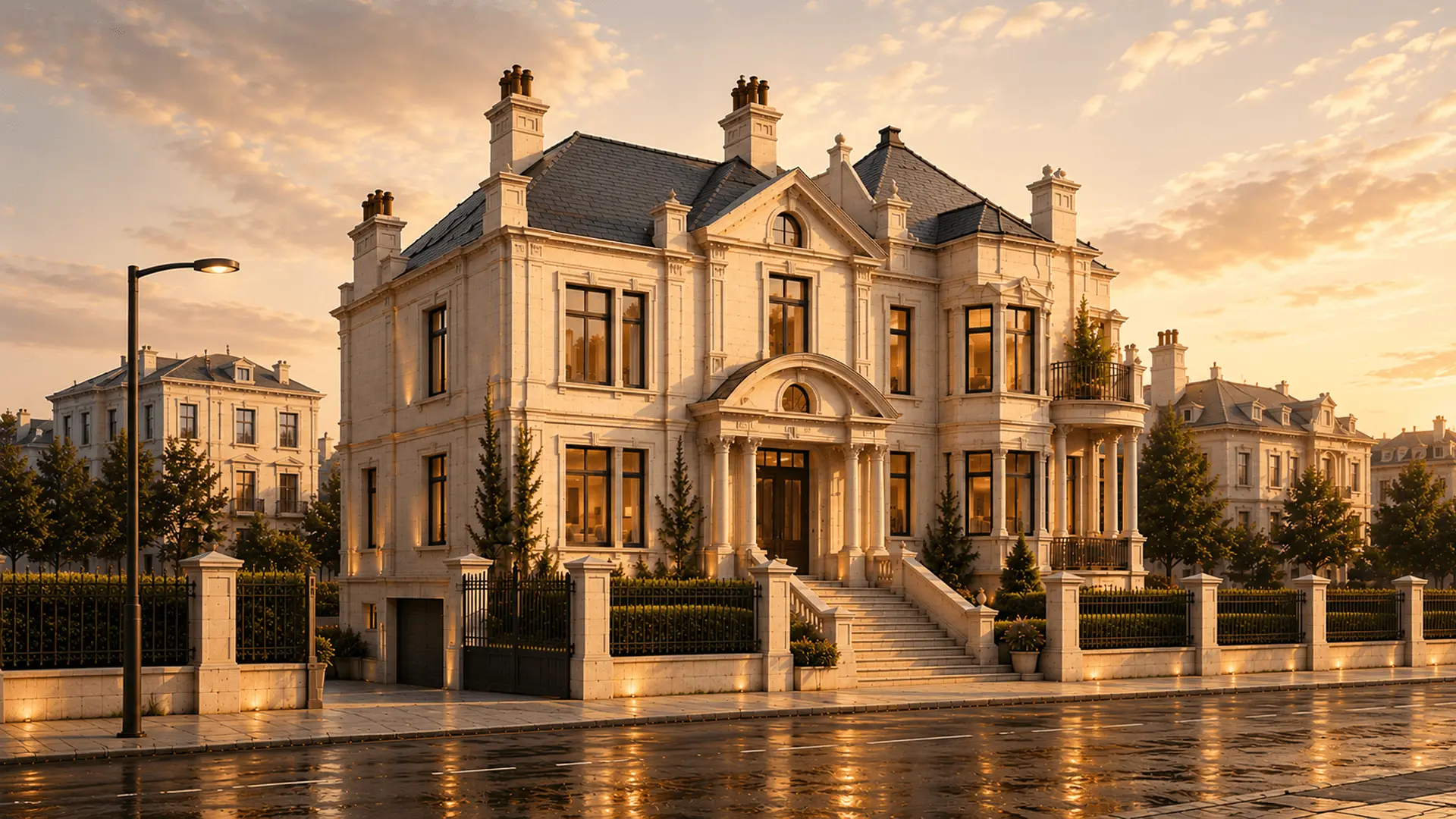
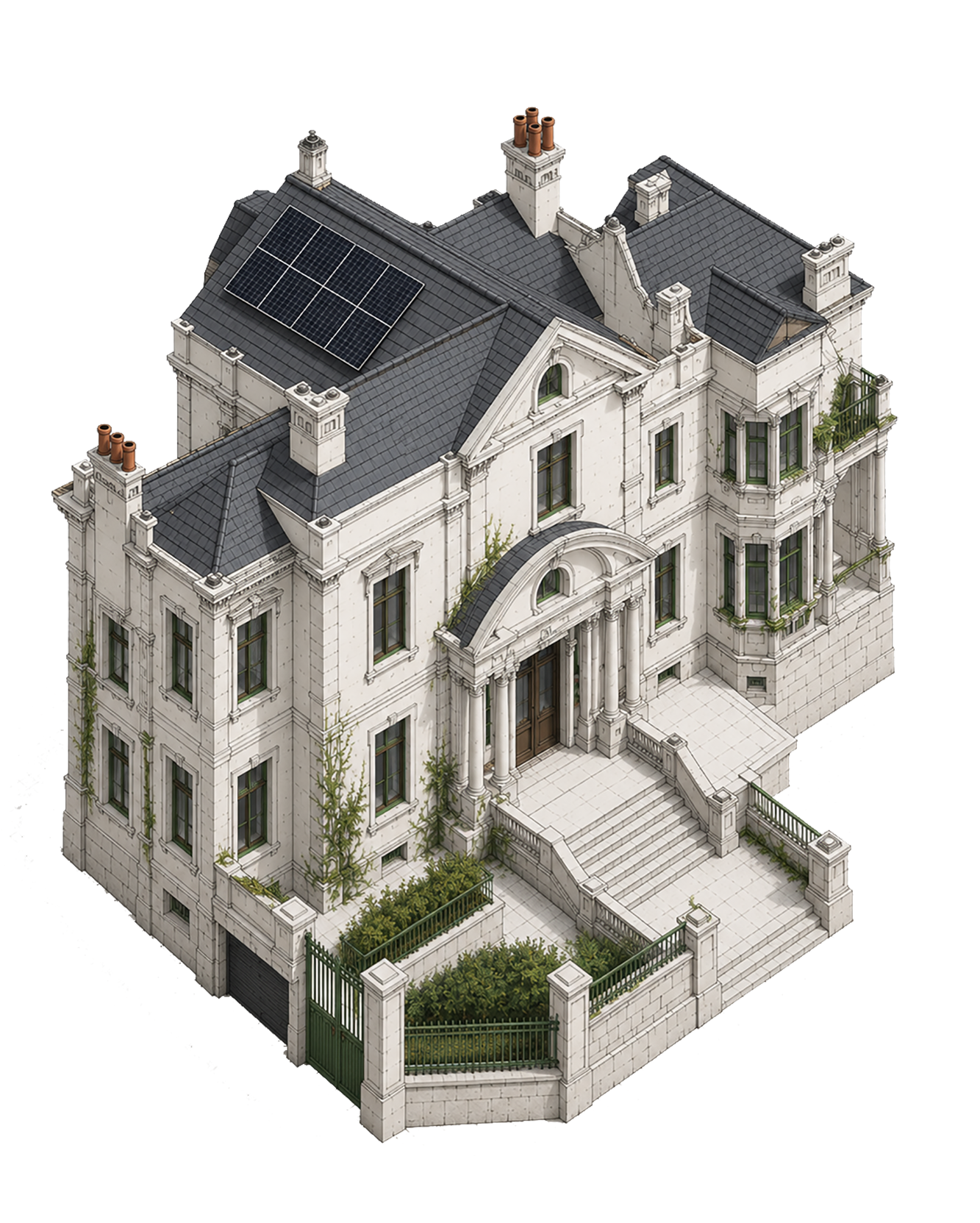
The renovation of an old luxurious house required a careful balance: improving thermal performance and reducing energy consumption while respecting the architectural details and character that define the property's value. The goal was to define a clear intervention procedure covering every element of the envelope, assess moisture-related risks specific to older construction, and achieve a significant, measurable reduction in energy consumption.
Our Analysis
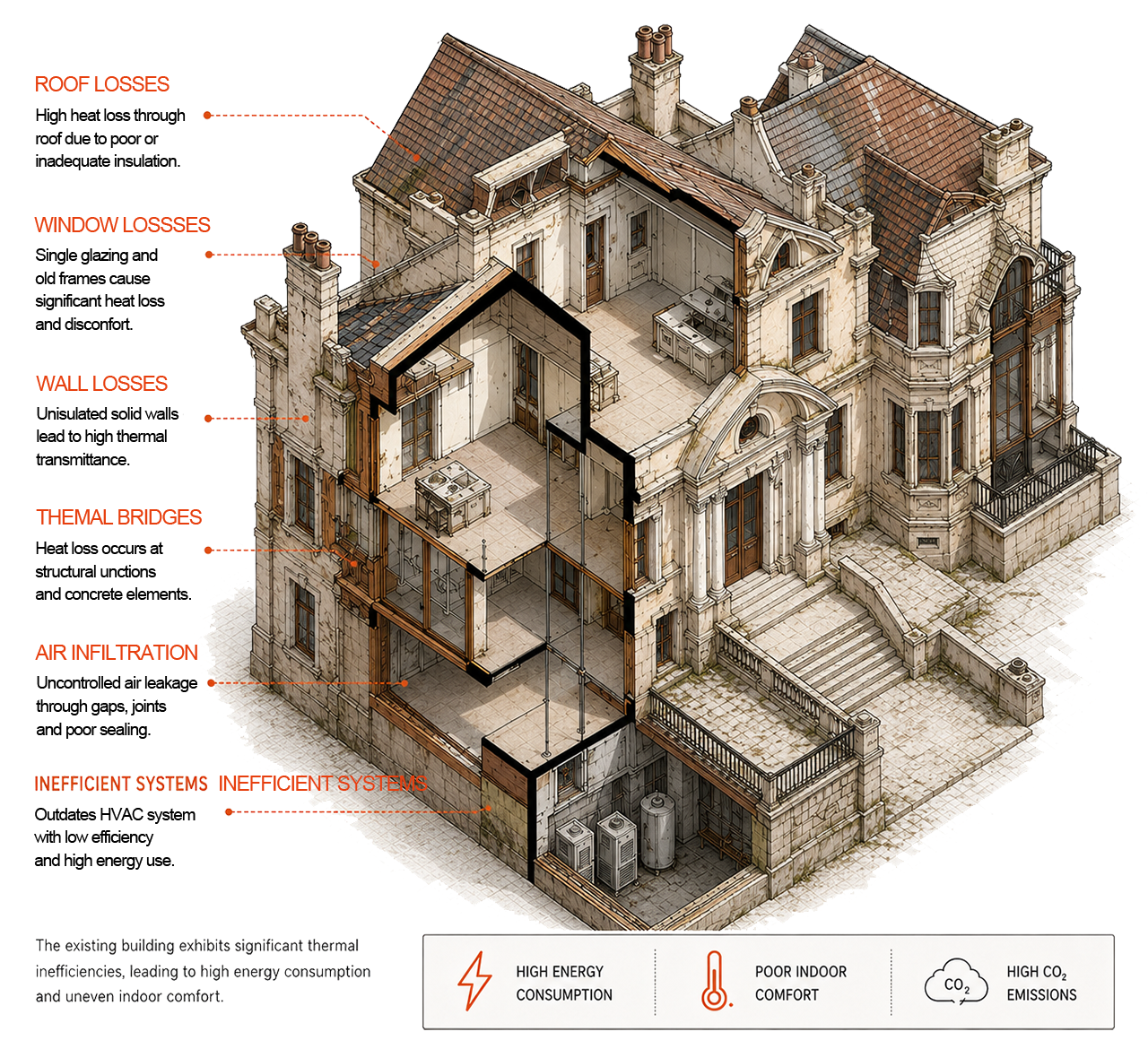
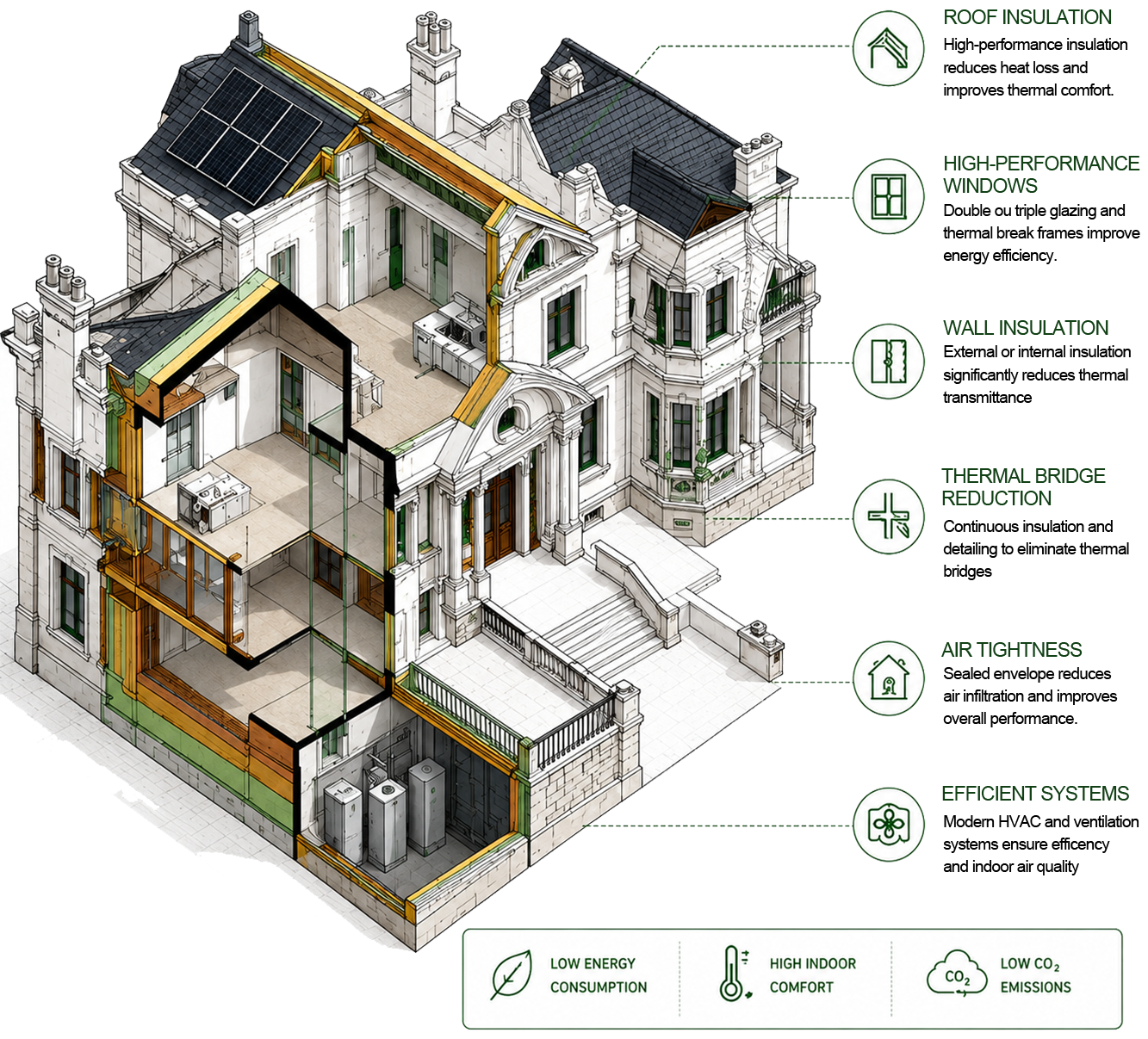
Renovation Intervention Procedure: We identified and prioritized every envelope element requiring intervention. Walls, roof, floors, windows, doors, thermal bridges at junctions, airtightness, and building systems. We defined a clear, sequenced strategy for each. This gave the client a precise roadmap of what needed to be upgraded, in what order, and why, avoiding piecemeal renovation decisions that often lead to wasted investment or new performance issues.
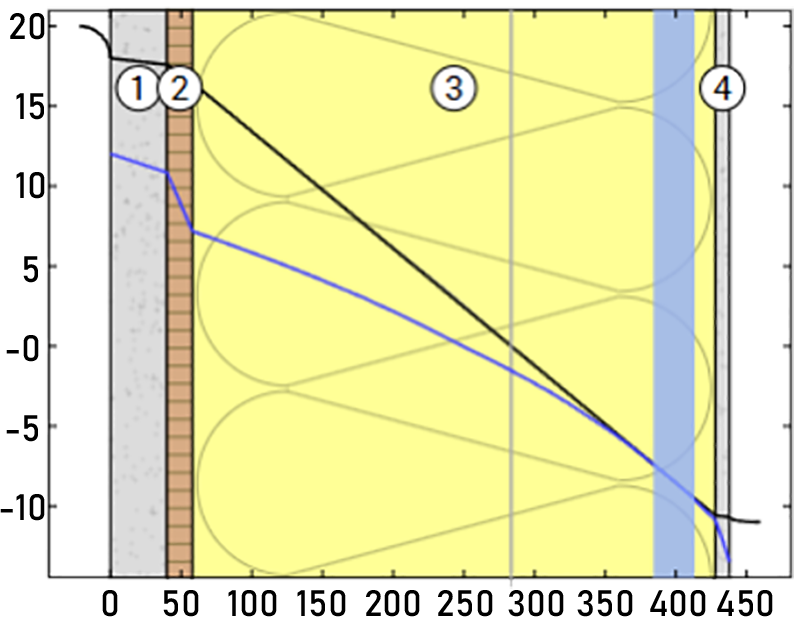
Envelope thermal and Humidity Study: We assessed moisture and thermal behavior within the building envelope, a critical concern in older constructions where added insulation can trap humidity and lead to condensation, mold, or material degradation if not properly managed. This same hygrothermal analysis is equally valuable on new buildings, where poor detailing or inappropriate material combinations can create similar risks. Here, it was applied to validate that both the preserved and newly renovated assemblies would perform safely over time.
Energy Consumption Analysis: We modeled the building's energy performance before and after the proposed interventions, testing combinations of insulation, glazing, and airtightness improvements. The optimized strategy achieved a reduction in energy consumption of up to 65% compared to the original building. A substantial gain achieved without compromising the house's historic character.
The Impact of Renovation
Energy consumption (kWh/m²/year) before and after building improvements.
100
75
50
25
0
100%
-65%ENERGY SAVED
35%
BEFOREHigh consumption
AFTERLow consumption
-65%ENERGY SAVED
Improved Comfort
Better indoor temperature all year round.
Lower Bills
Reduce your energy costs significantly.
Reduce Emissions
Lower CO&sub2; emissions for a sustainable future.
Increased Value
Improve the value and performance of your building.
Outcome
The result was a renovation strategy grounded in both technical rigor and architectural sensitivity: a clear, prioritized intervention plan for every envelope element, a moisture strategy validated for old and new construction alike, and an energy performance improvement of up to 65%, transforming an aging luxury property into a high-performing home while preserving the qualities that made it valuable in the first place.