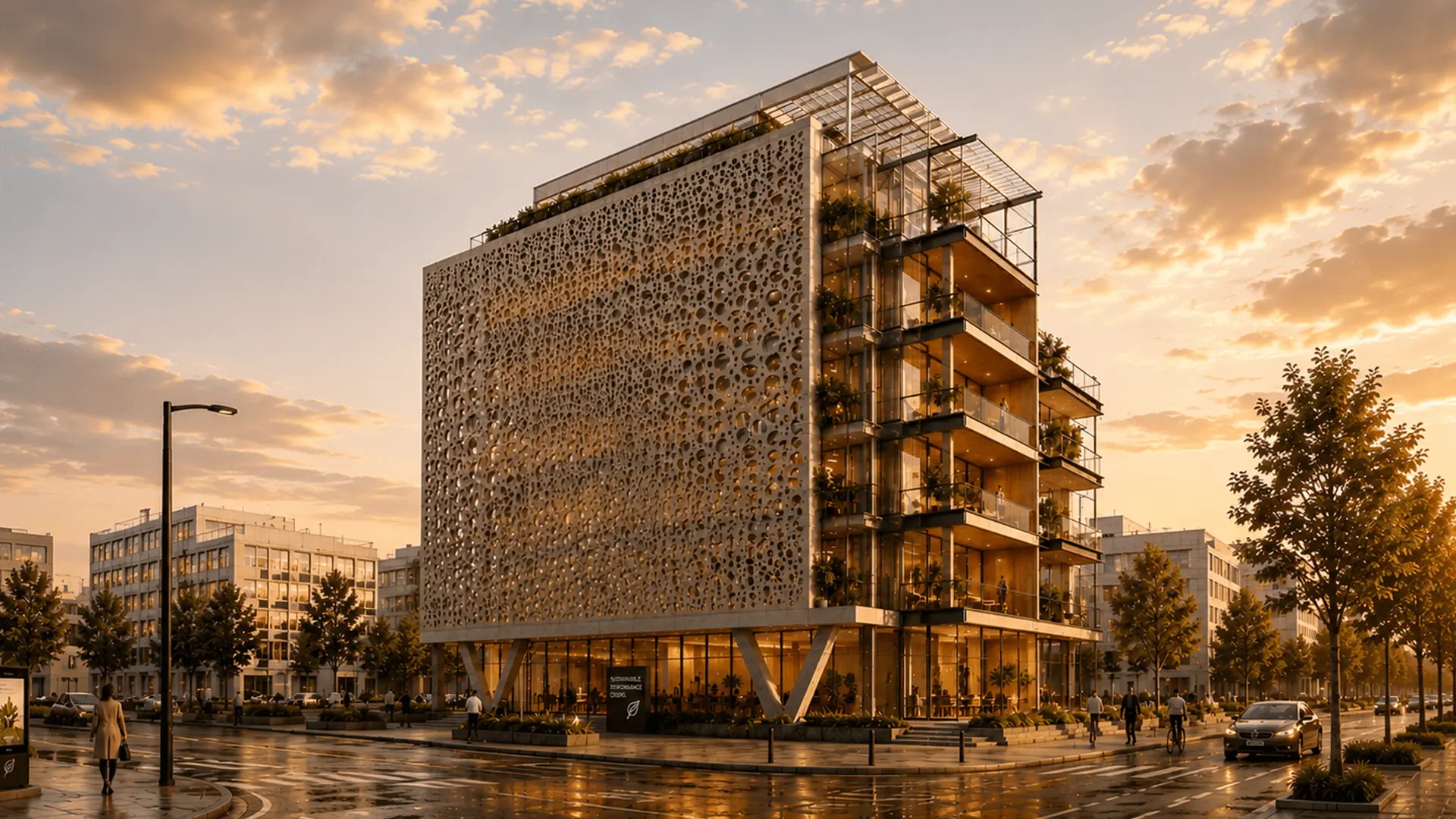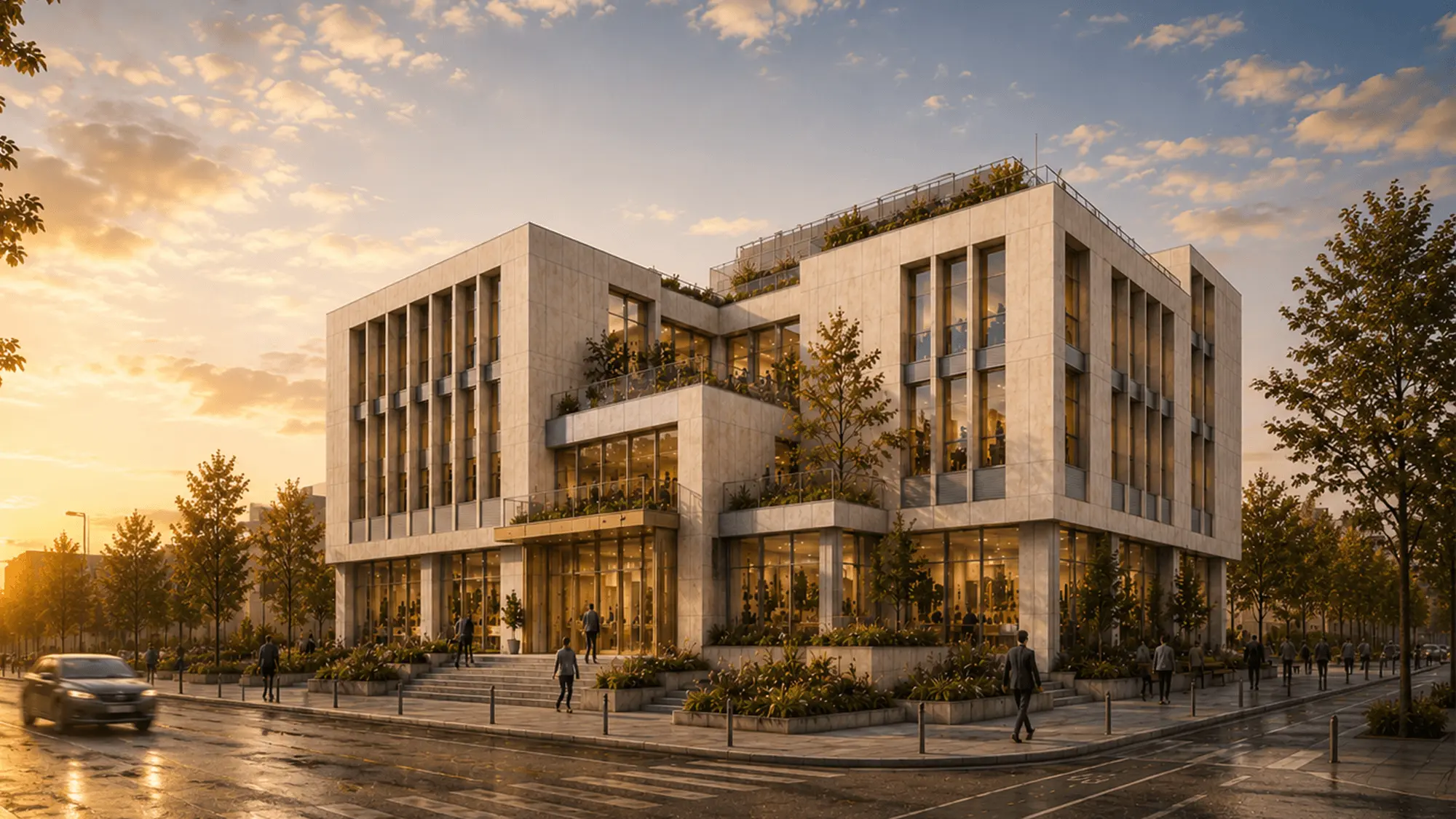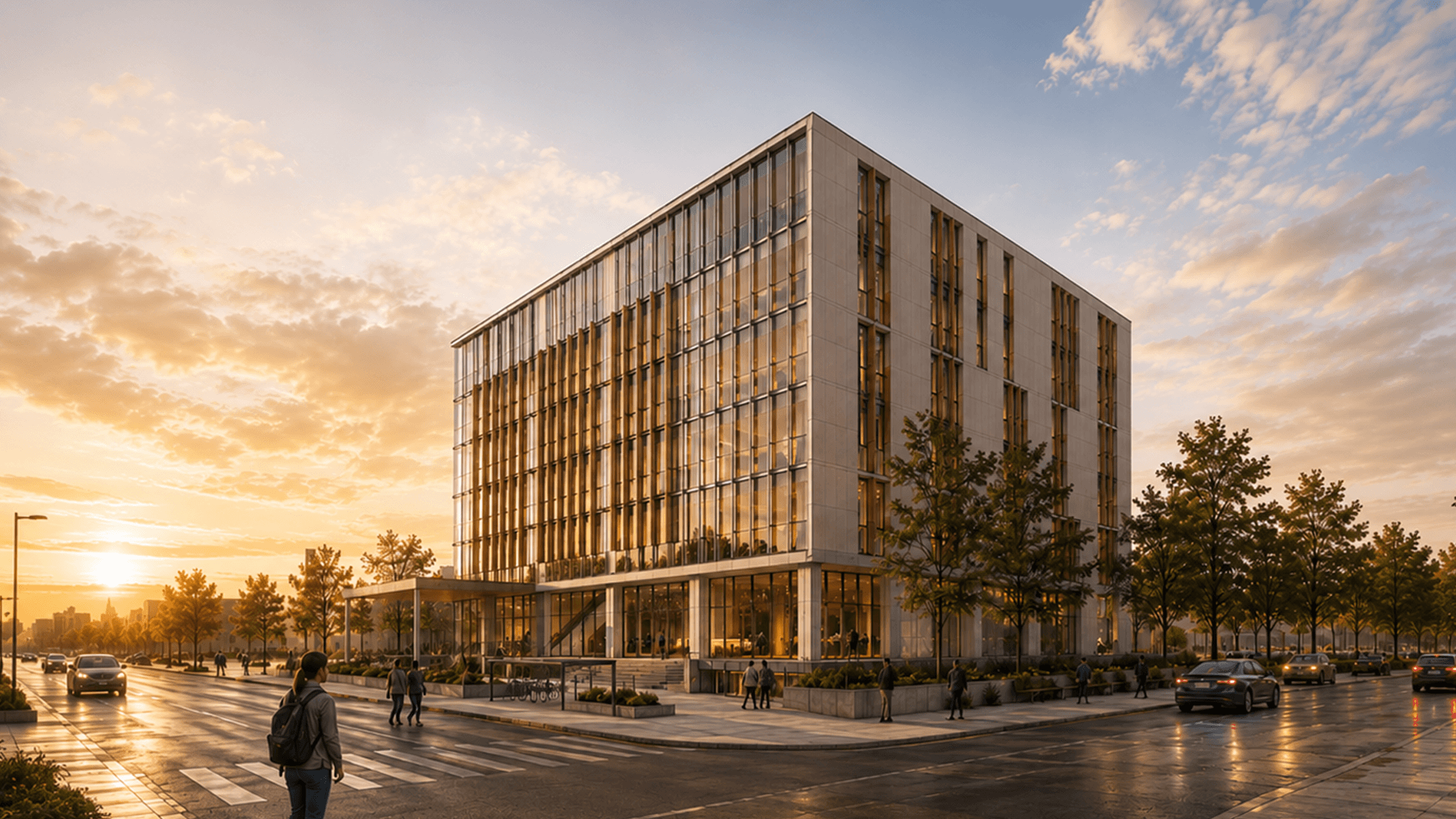
National Library
Thermal study & Energy Optimization
Reading rooms, archives, and public spaces
A national library combines large public reading rooms, high-occupancy circulation areas, and archival spaces, all requiring stable and comfortable indoor conditions for the people using them. Dynamic thermal simulations were used to evaluate summer overheating risk, winter discomfort, and overall energy consumption together, ensuring the building performed reliably across every season for visitors and staff alike.
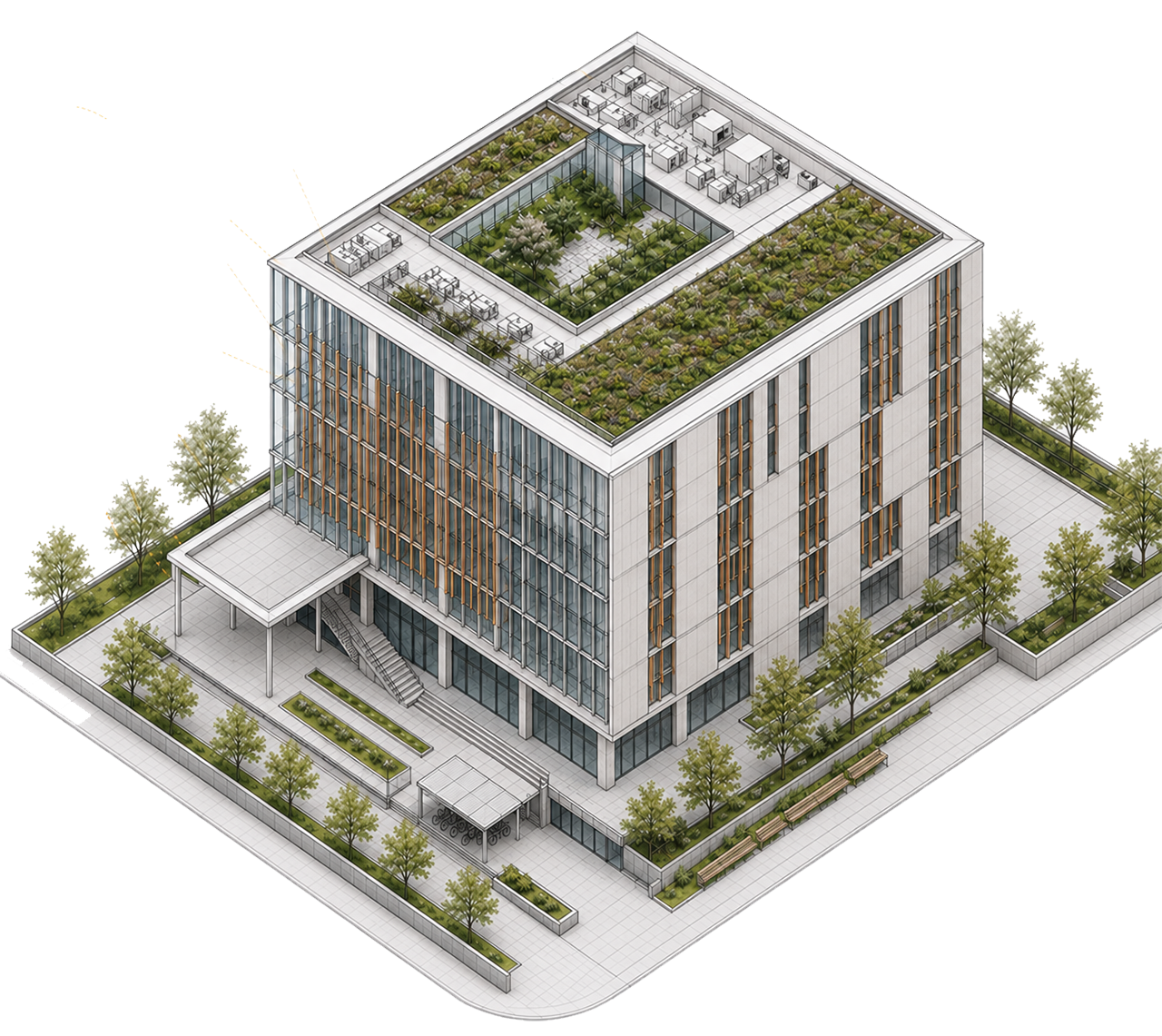
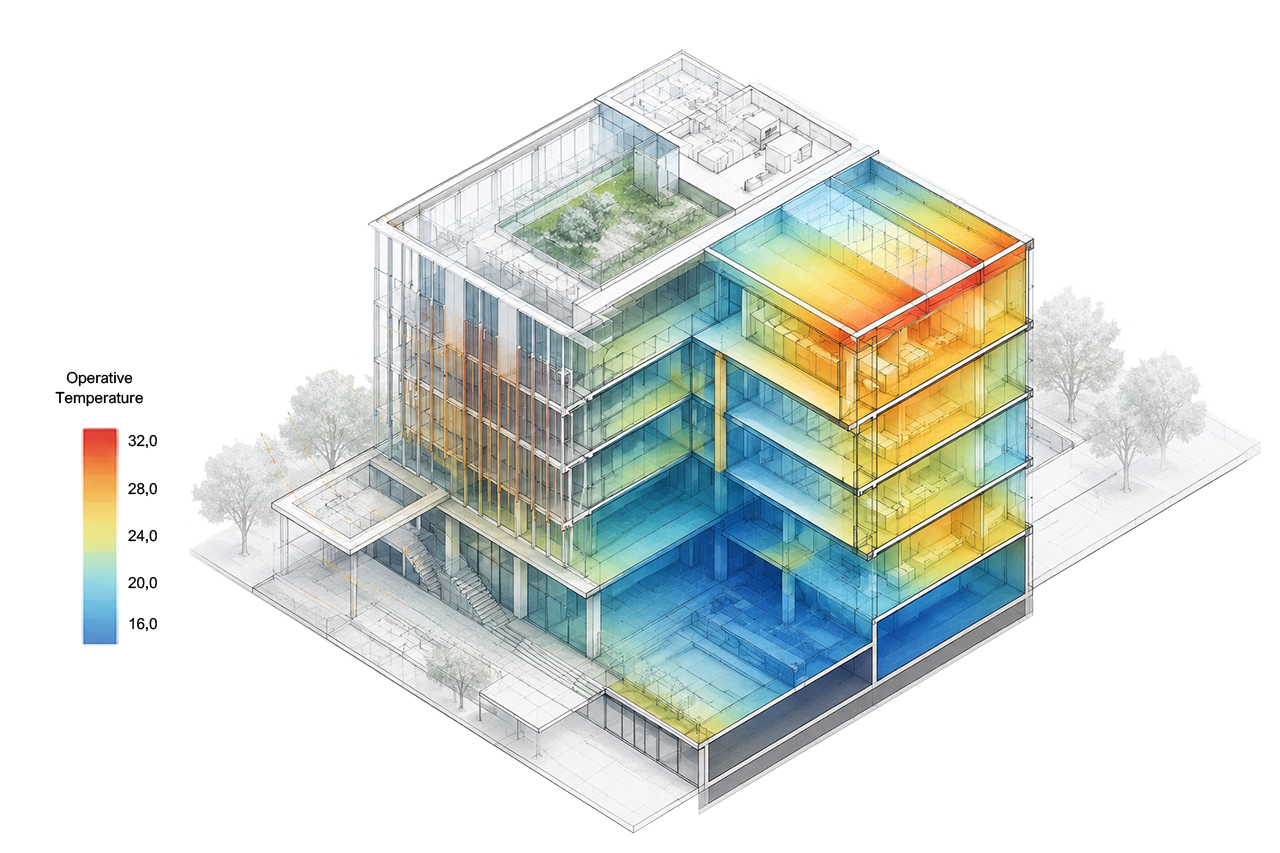
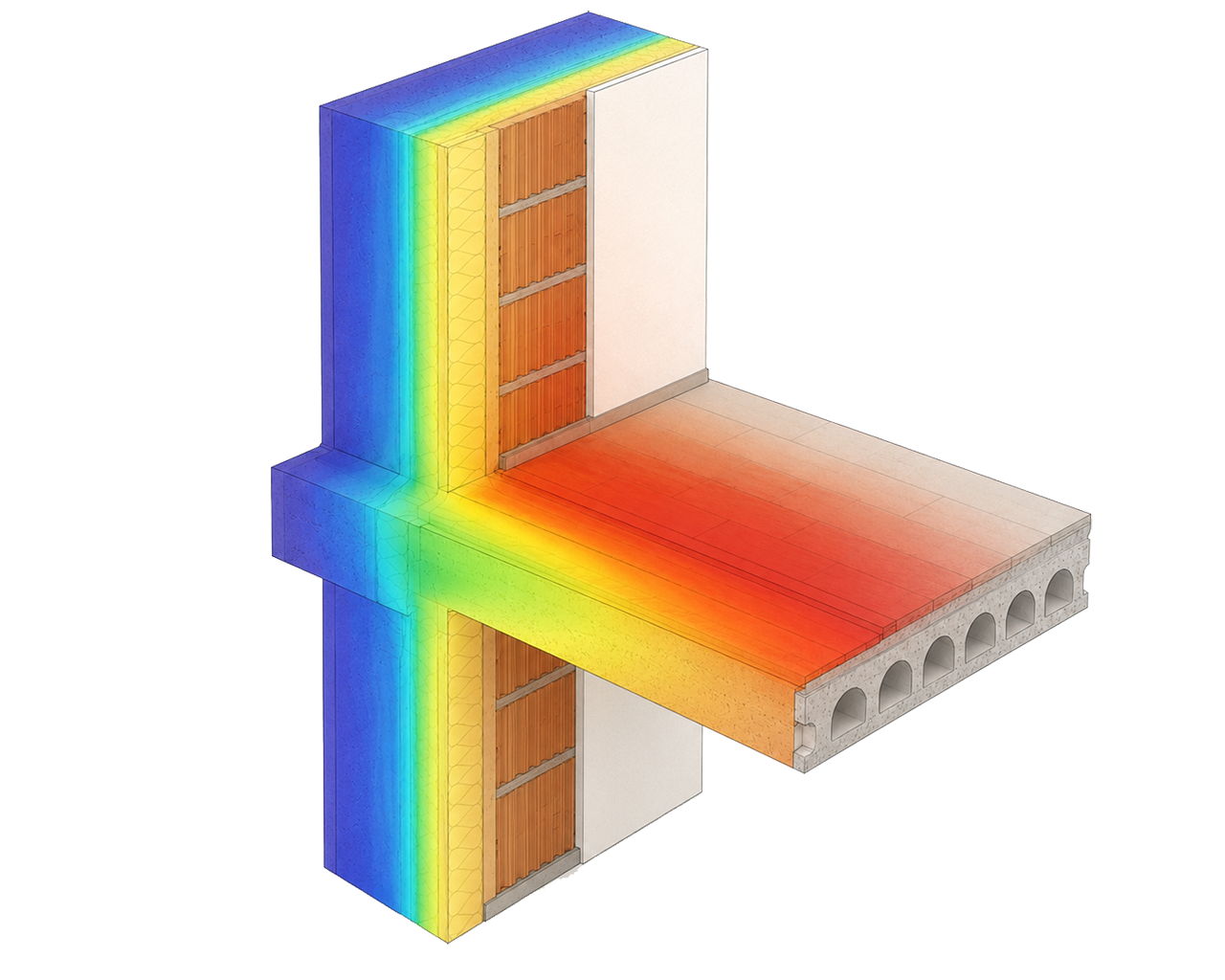
The result was a thermal strategy that performed year-round rather than seasonally: reduced summer overheating hours above 28°C in the main reading rooms, fewer winter discomfort hours thanks to improved insulation and reduced thermal bridging, and a measurable drop in projected annual energy consumption across heating, cooling, lighting, equipment, and ventilation. By addressing summer, winter, and energy performance together and optimizing the building's energy consumption throughout the process, the library achieved consistent comfort for visitors and staff while keeping operational costs under control.